

No products in the cart.
All other logos and trademarks are the property of their respective owners
© Copyright Rainer Diesel Performance - All Rights Reserved 2025
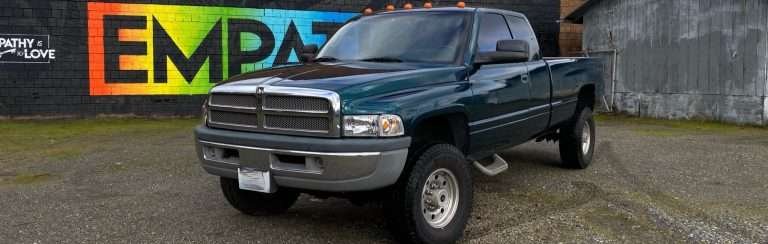
Old-School Muscle, Legendary Reliability, and Tons of Torque
Back in 1994, Dodge flipped the script on the pickup world. With its bold, big-rig-inspired styling, the redesigned Ram came charging onto the scene—and under the hood was a game-changer: the 5.9L Cummins 12-valve diesel. Fast forward a few decades, and these trucks have earned their place as legends in the diesel world.
If you’re thinking of buying one (or already hunting Craigslist and Facebook Marketplace at 1 a.m.), this guide is your roadmap to owning one of the most reliable, upgrade-friendly diesel trucks ever built.
In 1994, Dodge didn’t just give the Ram a fresh face—they gave its diesel heart a serious mechanical makeover. While horsepower and torque stayed the same for trucks equipped with the automatic transmission, manual models got a noticeable bump, thanks to the rock-solid NV4500 5-speed. These trucks cranked out 175 hp and 420 lb-ft of torque, up 15 hp and 20 lb-ft from their auto counterparts.
But the real star of the show? The Bosch P7100 injection pump—aka the “P-pump.” This mechanical marvel replaced the older VE pump and became a game-changer for diesel performance and reliability. Alongside it came a new Holset WH1C turbo (eventually replaced by the HX35), better injectors, a revised camshaft and pistons, and a larger intercooler—all combining to boost airflow and efficiency.
From 1994 to 1997, the 5.9L Cummins diesel shared key components like the cast-iron block, forged crankshaft, beefy 14mm main cap bolts, and durable cylinder head—all carried over from the previous generation. But as Dodge geared up for the upcoming 24-valve engine, some subtle changes snuck in. By 1997, some 12-valve engines began using smaller 12mm main bearing cap bolts, which would later be standard on the 24-valve models released mid-1998.
Even after 25+ years, the 12-valve Cummins is still one of the most sought-after engines in the diesel world—and for good reason. It’s simple, mechanical, and insanely durable. Best of all, it’s easy to add serious horsepower and torque with just a few bolt-ons. With minor upgrades, these engines can handle big power and keep on pulling—making them a favorite for everything from high-performance builds to custom swaps.
When it came to putting power to the pavement in the 1994–1998 Dodge Ram, buyers had two main transmission options: the legendary NV4500 5-speed manual or the rugged (but not indestructible) 47RH/47RE 4-speed automatic.
The 47RH was used in 1994–1995 models
The 47RE took over from 1996–1998
Now, if you’re wondering what all those letters and numbers mean, here’s the quick decode:
4 = Four forward gears (including overdrive)
7 = Torque capacity class
R = Rear-wheel drive
H = Hydraulic control
E = Electronic control
Both the 47RH and 47RE use a hydraulic valve body and an electronically controlled overdrive, but the key difference is how they manage governor pressure:
47RH: Fully hydraulic governor pressure
47RE: Electronic governor pressure, giving the PCM more control
This shift toward electronic control was Dodge’s way of future-proofing the platform, but it also introduced more complexity.
Here’s the reality: the 47RH and 47RE weren’t built to handle high horsepower or heavy towing out of the box. Push them hard—especially in a modified truck—and they’ll start showing their limits fast. Slipping clutches, failing torque converters, and heat-related wear are common complaints.
The good news? Aftermarket support is strong. With upgraded torque converters, valve bodies, input shafts, and heavy-duty internals, these transmissions can be built to handle serious power and hard use.
Between 1994 and 1997, the Dodge Ram lineup offered two main cab configurations: the classic Regular Cab and the roomier Club Cab (a.k.a. Extended Cab). Depending on how much bed space you needed, you had some flexibility:
Ram 2500: Available as a Regular Cab long bed, or a Club Cab with either a short or long bed.
Ram 3500: All business—only offered with a long bed, perfect for hauling and towing.
Then in 1998, Dodge raised the bar again by introducing the Quad Cab, featuring rear-hinged “suicide” doors. At the time, it was the only full-size pickup on the market with rear doors that opened, making access to the rear seats far more practical.
2WD Ram 2500/3500 models came with an independent front suspension with coil springs, offering a smoother ride on the pavement.
4WD models retained the rugged solid front axle, kept in check by four parallel leading links for longitudinal control and a track bar to manage lateral movement—tough and trail-ready.
When it came to stopping power:
Front: Vented disc brakes across the board
Rear: Drum brakes with ABS
Ram 2500: 13.0″ x 2.5″ rear drums
Ram 3500: Beefed up to 13.0″ x 3.5″ for heavier loads
Before the redesign, Dodge was barely making a dent in the truck market—fewer than 100,000 Rams were sold in 1993. Then the second-gen Ram hit the scene in ’94 and flipped the script. Sales more than doubled to over 232,000 units in that first year alone. By 1996, Dodge was moving nearly 400,000 Rams annually.
It wasn’t just a hit—it was a lifeline. The new Ram didn’t just boost truck sales, it helped revive the entire Dodge brand and reshaped the full-size pickup segment for good.
Like any classic pickup, second-gen Rams are no strangers to rust—especially if they’ve spent their lives in the snow-covered Northeast or Midwest. If you’re shopping for one, keep your eyes peeled for corrosion hot spots like:
Cab corners
Rocker panels
The underside of the bed
Frame rails, particularly near the front sway bar mounts, where rust and rot are notoriously common
If you’re dreaming of a solid, rust-free truck, you might want to expand your search to the Southwest or other dry-climate states. Trucks that have lived in Arizona, Texas, or California tend to be much cleaner underneath, making them a better long-term investment—even if it means a road trip or shipping fees.
Bottom line: Rust is the enemy, so bring a flashlight, get underneath, and inspect thoroughly before handing over your cash.
Legendary Cummins reliability
Easy to work on with basic tools
Massive aftermarket support
No complicated electronics
Great power potential with simple upgrades
Weak factory automatics
Killer Dowel Pin risk (if not fixed)
Prone to rust
No true 4-door crew cab option
Getting harder to find in clean condition
The 1994 Dodge Ram wasn’t just a redesign—it was a revolution. With bold styling and serious capability, it redefined Dodge’s place in the full-size truck market and set the tone for every Ram that followed. It wasn’t just a truck; it was a statement.
While finding one today without a bit of rust can be a challenge, the good news is the aftermarket is loaded with rust repair panels to help bring these classics back to life. And under the hood? That legendary 5.9L 12-valve Cummins is still one of the most reliable, long-lasting diesel engines out there. Even when pushed with performance upgrades, it’s not uncommon to see these motors run for hundreds of thousands of miles before needing any major work.
If you’re hunting for the sweet spot, look no further than the 1996–1998 models equipped with the NV4500 5-speed manual and the desirable 215 hp P-pump setup. They’re favorites among enthusiasts for a reason: simple, strong, and built to work.
Like with any older pickup, rust can be a common issue—especially depending on where you’re located. Be sure to check the rockers, cab corners, bedsides, and wheel well openings for any signs of rust or past rust repairs. It’s also a good idea to look for body filler or fresh paintwork, as body filler applied directly over rust is a quick fix that won’t last long. It’s definitely not the proper way to handle rust, so keep an eye out for that!
Don’t forget the frame! It can also develop varying degrees of rust. Make sure to give it a thorough inspection, especially at the weld points where the frame sections come together, as these are spots where rust can really sneak up on you. A little prep now can save you a big headache down the road!
Like most turbo-diesel engines, the 6BT loves a good upgrade—and responds beautifully to modifications that can crank up power well beyond stock levels. What makes the 5.9L Cummins stand out? It’s surprisingly simple to work on and incredibly reliable, making it a favorite for both weekend wrenchers and serious diesel enthusiasts.
Plus, the classic inline 6-cylinder layout gives you plenty of elbow room under the hood, making maintenance and upgrades a breeze. Whether you’re tuning for more torque or just keeping it stock and steady, the 6BT is a tried-and-true powerhouse you can count on.
This is a must-have upgrade and usually one of the first mods diesel owners make. With a range of features—some even offering real-time monitoring of your truck’s vitals—it’s an easy and effective way to add extra power to your truck!
Shop Tuners & Programmers
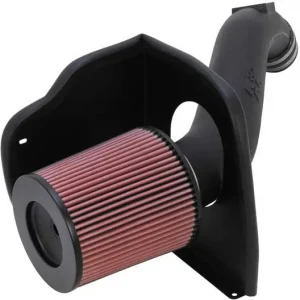
Let’s get more airflow and more power for your truck! Air intakes are a go-to upgrade, and the best part? They’re a breeze to install. Boosting your vehicle’s performance has never been so easy!
Shop our big selection of Air Intake Systems
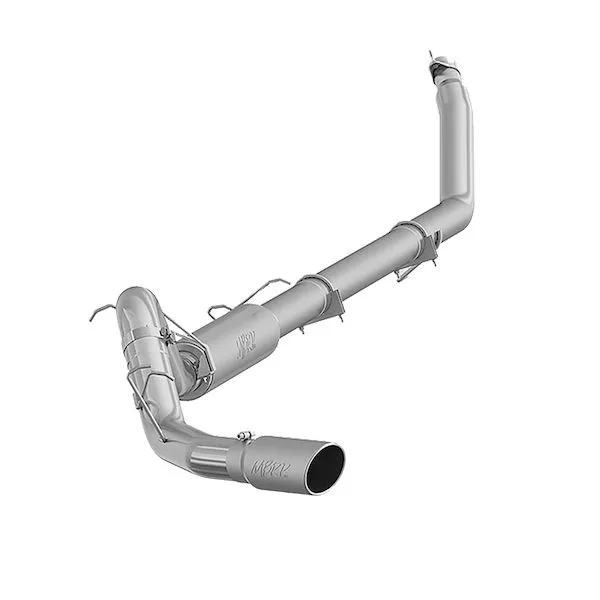
Upgrade your exhaust system, and you’ll not only boost horsepower and torque but also keep those exhaust gas temperatures (EGT’s) in check. It’s a win-win for your ride!

Direct-fit replacement and performance fuel injectors make replacing worn-out injectors simple and efficient, getting your truck back to peak performance in no time.
Check out our stock and performance fuel injectors

Fuel pumps are a common weak spot on these trucks, so it’s smart to upgrade your fuel lift pump since the factory one often struggles to keep up, even at stock levels. Upgrading to something like an AirDog or FASS is a great move—they offer extra volume to ensure your system runs smoothly and efficiently.
Upgrade your fuel system by adding an Lift Pump
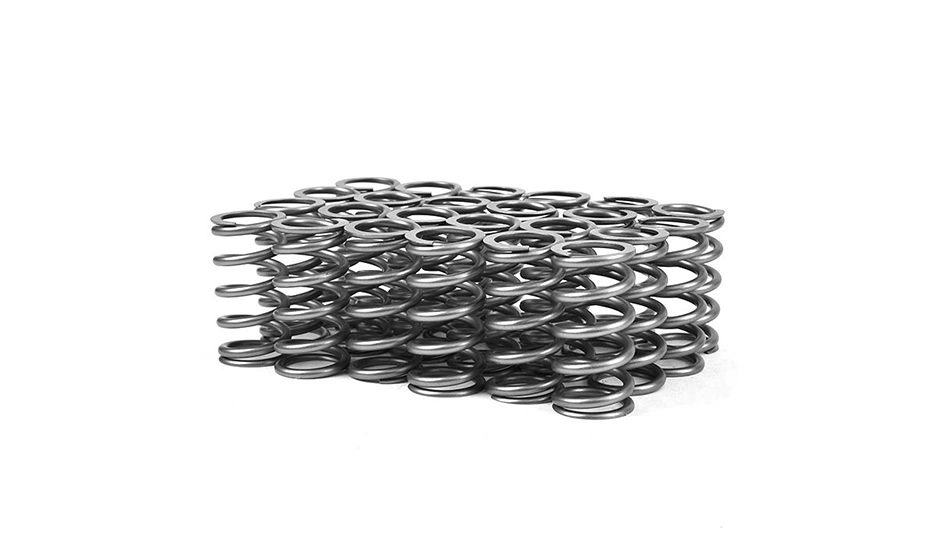
Aftermarket valve springs are engineered to tackle the higher RPMs and boost levels that come with modified engines. If you’re pushing your 5.9 to its limits, these upgraded springs help keep your valvetrain solid and prevent issues—so you can keep making power without missing a beat.
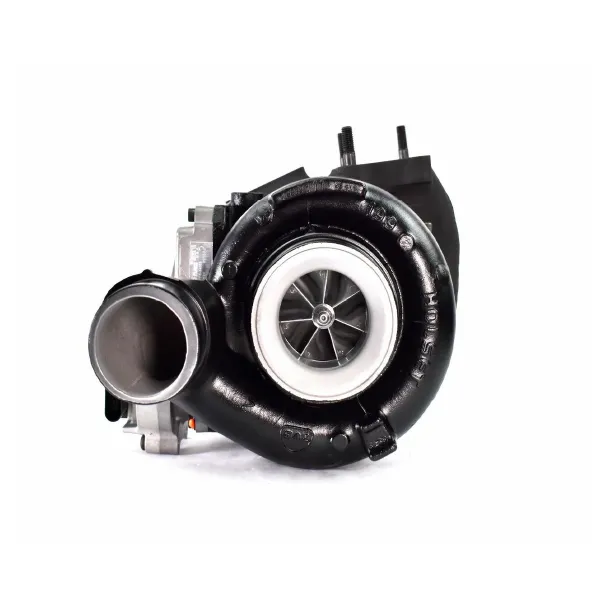
Swap out your worn turbocharger with a stock replacement or an upgraded version for a performance boost. Drop-in options like the Fleece Cheetah Turbocharger or the BD Screamer can enhance throttle response and provide additional top-end power for a more exciting drive.
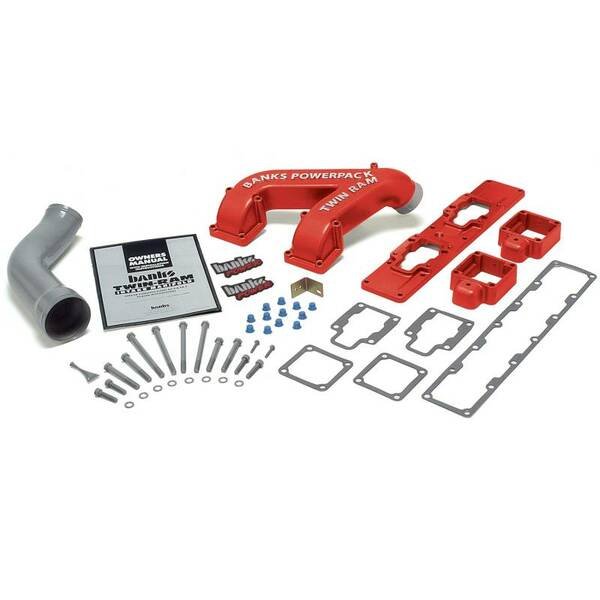
An aftermarket intake manifold helps increase the inlet area and improves air distribution in the cylinder head, leading to enhanced performance.
Get rid of your restrictive stock intake manifold and replace it with an aftermarket Intake Manifold
Production Years: | 1994, 1995, 1996, 1997, 1998 |
|
Model Availability: | Ram 2500, Ram 3500 | |
Common Names: | 5.9, 5.9L, 6BT, 12V, 12 Valve, 2nd Generation, 2nd Gen |
|
Configuration: | Inline 6 cylinder |
|
Displacement: | 359 cubic inches, 5.9 liters |
|
Bore: | 4.02″ (102mm) |
|
Stroke: | 4.72″ (120mm) |
|
Cylinder Head: | Cast Iron |
|
Engine Block: | Cast Iron w/ 6 Head Bolts Per Cylinder |
|
Firing Order: | 1-5-3-6-2-4 |
|
Compression Ratio: | 17.0 : 1 |
|
Crankshaft: | Forged Steel, 7 Main Bearings |
|
Pistons: | Cast Aluminum |
|
Connecting Rods: | Forged-Steel, I-Beam |
|
Intake Manifold: | Cast Aluminum |
|
Injectors: | Bosch |
|
Injection: | Direct Injection (DI), Mechanical Injection Pump, Mechanical Fuel Injectors |
|
Fuel Pump: | Bosch P7100 Injection Pump |
|
Aspiration: | Early 1994 | Holset WH1C Turbocharger, Air-To-Air Intercooler (Note – 1994 engines will either use a WH1C or HX35) |
1994-1998 | Holset HX35/HX35W Turbocharger, Air-To-Air Intercooler | |
Valvetrain: | OHV, 2 Valves Per Cylinder, Solid Lifter Camshaft |
|
Valve Lash (Clearance): | Exhaust Valve: | 0.020″ (Engine Cold) |
| Intake Valve: | 0.010″ (Engine Cold) |
Weight: | Approx. 1,150 lbs (Dry) |
|
Oil Capacity: | 12 qts w/ Filter (11.4L) |
|
Governed Speed: | 2,700 rpm |
|
Horsepower: | 1994-1995 | 160 hp @ 2,500 rpm (Auto Trans) 175 hp @ 2,600 rpm (Manual Trans) |
1996-1998 | 180 hp @ 2,500 rpm (Auto trans) 215 hp @ 2,600 rpm (Manual trans) | |
Torque: | 1994-1995 | 400 lb-ft @ 1,500 rpm (Auto Trans) 420 lb-ft @ 1,500 rpm (Manual Trans) |
1996-1998 | 420 lb-ft @ 1,500 rpm (Auto Trans) 440 lb-ft @ 1,500 rpm (Manual Trans) | |
Battery: |
| |
Transmissions: | 1994-1998 | NV4500 5-Speed Manual |
| 1994-1995 | 47RH 4-Speed Automatic |
1996-1998 | 47RE 4-Speed Automatic |
Engine Oil: | 15W-40 | Ambient Temperature > 10° F | 12.0 Qts Capacity w/ Oil Filter (11.35L) |
| 10W-30 | Ambient Temperature 0 – 30° F w/o Block Heater, < 0° F W/ Block Heater | 12.0 Qts Capacity w/ Oil Filter (11.35L) |
| 5W-30 | Ambient Temperature < 0° F w/o Block Heater | 12.0 Qts Capacity w/ Oil Filter (11.35L) |
Engine Coolant: | 50/50 Ethylene Glycol Coolant, Distilled Water | 24.0 – 26.0 qts Capacity (6-6.5 gallons) |
|
Automatic Transmission Fluid: | 47RH/47RE 4-Speed | ATF+4 | 4.0 qts Service Refill Capacity 14.5 – 16.5 qts Dry Fill Capacity |
Manual Transmission Fluid: | NV4500 5-Speed | SAE 75W-90 | 4.0 qts |
Transfer Case Fluid: | NV241 | ATF+4 | 2.4 qts |
| NV241HD | ATF+4 | 3.25 qts |
Front Differential Fluid: | Dana 60 | SAE 75W-140 | 3.15 qts |
Rear Differential Fluid: | Dana 70 2WD | SAE 75W-140 | 3.5 qts |
| Dana 70 4WD | SAE 75W-140 | 3.9 qts |
| Dana 80 2WD | SAE 75W-140 | 3.2 qts |
| Dana 80 4WD | SAE 75W-140 | 4.8 qts |
Service Procedure | Interval |
Replace Engine Oil & Filter: | 6,000 miles/6 months under normal driving conditions 3,000 miles/3 months under severe driving conditions |
Replace Fuel Filter: | 12,000 miles/12 months under normal driving conditions 6,000 miles/6 months under severe driving conditions |
Replace Air Filter: | 24,000 miles/24 months |
Engine Cooling System: | 52,500 miles/36 months and then every 24,000 miles/24 months |
Check/Adjust Valve Lash: | 24,000 miles/24 months |
Replace Automatic Transmission Fluid & Filter: | 30,000 miles |
Adjust Automatic Transmission Bands: | 24,000 miles/24 months |
Replace Manual Transmission Fluid: | 60,000 miles |
Replace Transfer Case Fluid: | 120,000 miles |
All other logos and trademarks are the property of their respective owners
© Copyright Rainer Diesel Performance - All Rights Reserved 2025